
Contact us
312.564.4570
train@animalsense.com


Great Expectations Part 2: From Naughty to Well-Behaved
Author: Andrea Obey | Date: September 13, 2013
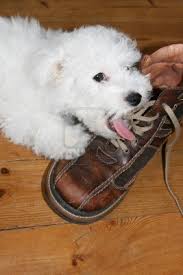
You get a new pup and he is super cute! He gives you kisses, loves to be held and is just a wonderful furry being. “I love you, new pup! Now, hurry up and be a perfectly well-behaved pup, will ya?”
I think this is one of the biggest expectations of dogs and certainly one, if not the, most challenging.
I have had this expectation with my own dogs, and I would guess most dog owners have. Of course, it isn’t very realistic. One day the puppy is peeing in the house, running away with socks, chewing on furniture, running amok and not listening to a darn word you say. You teach him appropriate behavior and manners a few times and it should be all okay now, right? Probably not.
Let’s face it: the cuteness factor of a puppy pooping on your oriental rug, chewing your new shoes, not settling down and various other annoying behaviors start to lose their appeal after a few weeks. As one of my mentors always says, “cute is not sufficient”, and she is right. I think this is where dog owners start to loose their patience and give up. It can be really hard work a lot of the time and it takes diligence. When puppies reach adolescence things start to get even more difficult. Fear-based behaviors start to rear their ugly heads, there seems to be regression in the basics and boundaries are tested. This is also the most dangerous time in a dog’s life, as the likeliness of them being surrendered to a shelter skyrockets.
But have hope! I’d like to give you a few tips that will be helpful with puppy training and will certainly get you much closer to that idealistic well behaved companion we would like in our lives.
Think of training as constant and fluid instead of on a rigorous schedule.
You are always training your dog whether you know it or not. If you come to class or even if you read a puppy training book, most of us dog trainers give you guidelines for frequency to practice new behaviors, e.g., “sit”, “down”, “stand”, “come”, etc. Those are good guidelines but please remember that training doesn’t end there. Every moment the puppy is awake is an opportunity to train him something. Even if your puppy is chewing on a stuffed Kong or other food dispensing toy, it is learning something. He is learning to settle in his place quietly and to occupy himself in an approved way. Meanwhile, you have time to cook dinner, answer emails or pay bills but you are still training your dog. Or, say you want to watch your favorite TV program and your puppy wants affection. Can do! Have your puppy lie in your lap while you are petting him and handle his ears, look in his mouth and eyes, rub his belly, touch his paws. It’s really easy because you are already petting him, so why not get him used to handling as well. You aren’t really doing much but you are still training your pup. How cool is that?
Give yourself and your pup a break.
Try not to compare.
Make training fun!
Going back to my first point, if you make training a game most of the time, it will make things easier for you and your dog. This applies to all dogs of all ages, by the way. This will also help take the pressure off of constant training. I find myself making jokes out of simple things when I get a little bored with training. I start talking in a silly voice or having an imaginary conversation with the dog. Of course he doesn’t understand but it becomes a goofy comedy routine. You can also make things a race. How fast can you get to your crate? How many times can you do a sit/down/stand in 30 seconds? How long will it take you to find the stuffed Kong in the other room? Be creative and enjoy yourselves!
Training is an ongoing and forever evolving process of learning, growing and building a wonderful relationship with your dog. You will have great days and not so great days. But patiently working through those tough times and having that expectation instead of the flawless Fido one will make a great difference in your life and the life of your beloved four-legged best pal.

Anyone looking for a trainer should look no further than AnimalSense.
Jill C. | View Client Testimonials
© 2015 Paradise 4 Paws AS, LLC. All Rights Reserved.