
Contact us
312.564.4570


How to Handle Off-Leash Dog Surprises
Author: Nicolette Meyer | Date: October 3, 2013
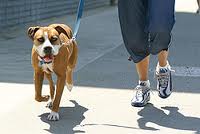
I live in a neighborhood where there is a bit of a cultural difference in regards to the ownership, care and training of dogs. Basically, there are lots of off-leash dogs roaming around, and from what I’ve seen, the training styles employed are quite different than what we practice at AnimalSense. A few days ago when taking my dog out for a walk, we had a situation arise that could have been potentially dangerous: an off-leash dog came running toward us, full speed, with no owner in sight.
It’s worth noting that despite my best attempts, my dog is not always friendly with other dogs when he is on his leash. It’s not his fault. He had some bad experiences early in his life, and it is something that I not only manage when we’re out for walks, but something that we continue to work on and probably will for the rest of his life. So when a dog comes charging up to him, and Otis can’t run the other way because he’s on a leash, he gets worked up (to say the least).
As someone who owns a sensitive dog, it’s extremely frustrating – and quite frankly scary! – to have a strange dog approach, charge us, with no human supervision to control the animal.
Over time, I’ve had to develop some management techniques to employ if and when this happens, and I’ve had to find a way to speak to the dogs’ owners in a manner that is both professional and honest. It serves no purpose to yell at your neighbors, as it’s usually not a well-received form of communication.
So here are some tips, tricks, and advise for you to use if you find yourself in this situation:
- STAY CALM! This is extremely important! Dogs feed off our energy and if we are nervous, scared or freaking out, chances are the dogs are going to mirror our behavior which will just add to the problem.
- If your dog is small enough, scoop him up off the ground so that the dogs are separated and the possibility for a nose to nose greeting is removed.
- Don’t run away! Dogs love to play chase, so running in the opposite direction will most likely entice the loose dog to run after you.
- Always bring treats on your walk (this is a good tactic to use for leash manners with your own dog anyway, as it gives you the opportunity to reward them for walking well). It helps to have a tasty treat that you can throw away from you to distract the loose dog, giving you the chance to move away while they are preoccupied with food.
- Sometimes telling the loose dog calmly and firmly to “Stop” or “Sit” will actually work (if the dog has been taught this by their owner; it’s worth a shot!).
As for dealing with the human who owns the loose dog, it can be a little trickier.
A lot of times, people see no problem with letting their dog roam free without a leash, and it’s that attitude that is the most difficult part about having the conversation. Sometimes people don’t realize that it’s not only dangerous for their dog (they could run into traffic, or approach a dog who is not nice and get hurt, or approach a person who is terrified of dogs, or a host of other scenarios) but they don’t realize that most cities in the United States have leash laws, and they could be fined. I have had to let my neighbors know about my own dog’s socialization problems, and explain to them that for the safety of not only my dog, but theirs as well, it’s a good idea for them to not have their pooch off leash when hanging out on the steps of their building. It’s usually better received if the blame is not placed on them, but explained to them that you have their dog’s best interest in mind.
Those of us who live in the city are in close proximity to our neighbors, and it’s important to be diplomatic and understanding whenever possible, even if we see behavior that irks us. Knowing what to do if you find yourself in a sticky situation and how to have a discussion with people in your community is a crucial part of living in the urban environment.
Let us know if you’ve ever been in this situation and what you’ve done. We’d love to hear your feedback and experiences.
I often wish I could stop people on the street who’s dogs are misbehaving and suggest they sign up for classes at AnimalSense.
Diane C. | View Client Testimonials
© 2019 Paradise 4 Paws AS, LLC. All Rights Reserved.